


Critical Thoughts on Embedded Sustainment & Obsolescence
Critical Thoughts is where we share hard-won insights from the field. It’s not a blog—it’s a working record of what we’ve learned supporting sustainment, managing obsolescence, and partnering with OEMs on legacy challenges that don’t fit the usual models.
These are the strategic, technical, and sometimes messy realities behind keeping embedded systems mission-ready over the long haul.
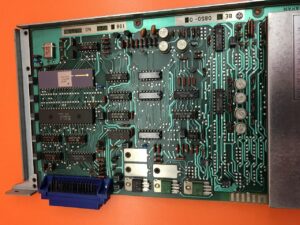
Not every product belongs on your roadmap forever. For embedded OEMs, developing a product end-of-life strategy can be complicated. The decision to exit a legacy product is rarely straightforward. It’s messy. Strategic customers may still rely on it. The documentation might be partial or outdated. There might be lingering fears about compliance or the risk…
As the summer comes to a close and we head into the fourth quarter, Tania Scroggie, Director of OEM Relations at GDCA, Inc., returns with another installment of her Youtube series, Tania’s Teachables! This month, Tania explores a major challenge in the sustainment of legacy electronics: the ownership of the product and its legacy. Every…

When aging systems become difficult to support, redesign often feels like the obvious solution. Components become obsolete. Supply chains become unstable. Repair demand increases. Engineering teams spend more time supporting systems that were designed decades ago. Eventually, the conversation shifts toward replacement: Wouldn’t it be easier to redesign the system and start over? Sometimes, yes.…
Legacy electronics continue to be one of the biggest hidden challenges facing OEMs specializing in embedded electronics. While these aging products remain essential to supporting customers, they often consume valuable engineering resources that should be focused on innovation and new product development. In the latest installment of Tania’s Teachables, GDCA’s Director of OEM Relations, Tania…

Legacy product support is one of the biggest challenges facing OEMs today. As customers continue relying on aging systems, manufacturers must balance long-term support obligations with innovation, engineering resources, and product portfolio growth. The question isn’t whether legacy products should be supported—it’s how to do so without slowing the future of your business. You built a great product, and…

The Misunderstanding Around Innovation in Legacy Systems Legacy systems sustainment is often overlooked as a form of innovation. While innovation is commonly associated with new technology, new platforms, and new product development, some of the most valuable innovation occurs when organizations preserve proven operational capability for decades. But in long-lifecycle industries, some of the most valuable innovation…

As a Program Lead or Procurement Officer, you are often caught in an impossible bind. You are faced with a “false binary” for your legacy products. On one hand, you can choose to Sustain them, which forces you to pull your best engineers off their NPI “fire” to go fight a legacy “fire drill,” draining resources and…
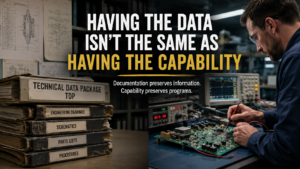
The Illusion of “Having the Data” For many organizations, legacy systems sustainment begins with a simple assumption: acquire the Technical Data Package (TDP), transfer the data internally, and supportability will follow. On paper, it feels logical. The design exists. The documentation exists. The product should now be reproducible. But many organizations discover the same reality…

For Embedded OEMs, the risk of legacy isn’t just technical—it’s reputational. When aging products remain in your portfolio without a clear plan for support, the brand you’ve worked so hard to build is what takes the hit. Strategic customers expect continuity. When legacy products fail in the field or can’t be supported, they don’t just blame the product—they question the company. Legacy Isn’t Neutral Holding on to legacy…

Why last time buys fail—and how a structured sustainment strategy protects long-lifecycle programs from recurring supply chain disruption When a critical component goes obsolete, the response is immediate: forecast demand, secure funding, and execute a last time buy before supply disappears. It feels like control—the risk is identified, the inventory is secured, and the issue is closed. Until…